High Plains Gardening
The gardening website of the Texas High Plains Region




The color pink, a tint of red, lighter and softer than red.
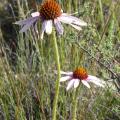
Echinacea angustifolia is the herbal echinacea. Native throughout most of the Midwest, and the Texas Panhandle. Very drought tolerant. It can be seen growing along roadsides and in nature generally. A good cut flower. The common name Black Samson refers to its roots. Not as showy as E. purpurea and newer introductions.
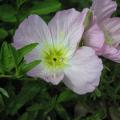
Showy evening primrose is a plains states native, including the Texas Panhandle. Showy evening primrose blooms whitish pink in late spring, with each flower lasting a single day, opening in the morning and closing later in the day. The leaves are green narrow and lance-like and emerge from spreading rhizomes. The plant spreads prolifically by rhizomes and seeds, especially in amended and well watered soil. It is not well mannered in a mixed bed or border, I consider it invasive for the garden.
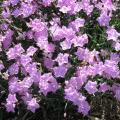
This pink (old common name referring to the pinked edges) is pink. Heat tolerant fragrant perennial forms a spreading mound. The buds provide interest for several weeks before they open. Other perennial dianthus thrive in our area, biennial and annual dianthus as well. Look for heat tolerant varieties. D. gratianopolitanus ‘Firewitch’ is another dianthus to try. Carnations, maiden pinks, Sweet Williams are members of this genus. There are many hybrid cultivars, and more every year.
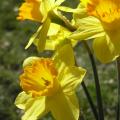
Daffodils are the most notable of the spring bulbs. Reliable from year to year, daffodils can be depended upon to bloom even when faced with late season blizzards and are unpalatable to deer and squirrels. Daffodils aren't too particular about soil, but do better in amended soil, planted about 4 inches deep in October to December. Typical bloom times are February through April, depending on the variety, and there are thousands of varieties to choose from.
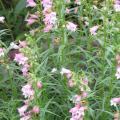
‘Red Rocks’ is another hybrid cultivar, named for the Denver, Colorado red sandstone area and amphitheater. P. 'Red Rocks' is highly suitable for the average garden, rather than a specialized penstemon bed. Again, do not deadhead unless reblooming has occurred and you desire a tidier appearance. Don’t over water or over amend the soil, but it will thrive companionably with other medium water-use plants.
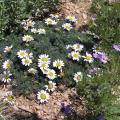
Mat daisy is a low growing spring blooming plant. Drought tolerant. Not exactly a groundcover, as the top growth disappears during summer and reemerges as a green basal rosette in fall, getting ready to bloom again in the spring. Blooms late March to May with small white daisy-like flowers that have pink undersides. Forms a compact ground-hugging mat. Will self seed some, but never invasively.