High Plains Gardening
The gardening website of the Texas High Plains Region




Blooms late spring into summer, usually during the months of May and June.
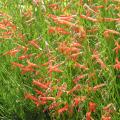
A long-lived evergreen penstemon for the average bed or border. Small orange red tubular flowers attract hummingbirds, as do most red tubular flowers. Low growing and longer flowering than most, especially the more mature the specimen.
After several years, the pine needle like foliage can resemble a miniature bonsai. Pineleaf penstemon is also a must-have for the low water-use bed or border or rock garden because of its evergreen foliage and longer blooming nature. In late summer, snip off the dried, spent flower heads; some re-blooming may occur.
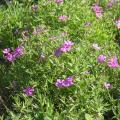
Santa Fe phlox is rarely available even at native plant nurseries, but when it is, don't pass it up. Sun loving and drought tolerant, the Santa Fe phlox blooms late spring throughout the summer with once a month watering. Five petaled, small pink flowers about an inch across with a small white eye can cover the plant. Native to canyons, mesas, and rocky desert slopes from West Texas to southeastern Arizona and into northern Mexico. Seeds of the phlox pop out when they are mature, making seed collection and propagation difficult.
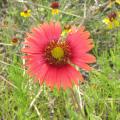
Our showiest native wildflower; an annual. Little care required. Grows along roadsides and in natural areas throughout our region. Gaillardias are popular these days, with many new introductions all the time. G. pulchella is a good choice for seeding in prairie areas with other native grasses and wildflowers.
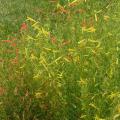
‘Mersea Yellow’ is similar to the orange red pineleaf penstemon in culture, except for requiring a bit more water. Native perennial to the Southwest. Its leaves are lighter green, but still evergreen, without the tinge of mahogany in winter. ‘Mersea Yellow’ is an excellent selection for the medium water-use zones of your landscape. One of the few yellow flowering penstemons.
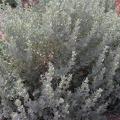
Shadscale lives in alkaline caliche soil in most of its native range throughout the Southwest and has a high tolerance of saline or sodic soils. Given improved soil conditions, it will grow larger. Do not improve the soil to insure it keeps its neat, compact shape. Shadscale blooms yellow flowers in early summer which mature into seed heads. Its silver-gray leaves are semi-evergreen.