High Plains Gardening
The gardening website of the Texas High Plains Region




Plants are known to be cold hardy to at least -10°F.
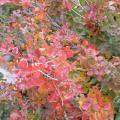
Sumacs are known for brillian fall foliage. Ground cover woody shrub 24-30" tall with dark shiny green leaves that turn a thrilling orange-red in the fall. Small yellow flowers at springtime.
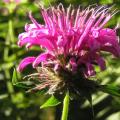
An American native requiring medium to high water, it is a prolific grower, an old fashion pass-along plant. Perfect for a mixed border or at the edge of the vegetable garden to attract bees. The variety shown is most likely 'Violet Queen', although I'm unsure. However, it is not the common scarlet bee balm or red bergamot, that also grows well here. Blooms throught the summer and is an attractive addition.
Virginia creeper, one of our pernicious native creepers, is a worthy low care vine for brilliant fall foliage and deep blue berries (highly toxic to humans) loved by birds. Virginia creeper normally spread by seeds in bird droppings, which is the method it came to my landscape. When spotted early, Virginia creeper easily pulls out, but if not spotted, within no time, it will cover a fence, climb a pole or cover an area. Which can be either a good thing or a bad thing, depending on one's view.
Utah serviceberry is a quite beautiful shrub extending from the Southwestern states northward throughout the Rocky Mountains and through various ecosystems between 4000 and 8000 ft in elevation. Deep green leaves, large oval shaped and toothed at the margins, many intricately branched, smooth gray to maroon bark. Large white flowers with five widely spaced petals open in May and June. Berries appear in the summer, ripening to pink, then red, then finally dark blue. Leaves turn red and orange in the fall.
Western sand cherry is a shrub native to the northern plains favoring sandy soils. Cold and heat tolerant, and low water-use once established. Beautiful, fragrant white flowers in spring time, producing edible black cherries (however, some references advice not to eat the fruit if it is bitter).
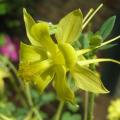
Delicate and fragile in appearance, columbines are some of the most durable, versatile plants in the West. Aquilegia chrysantha is the Texas native columbine, happy in both sun or shade, moist areas or dry. Aquilegia chrysantha is native to the Chihuahuan and Sonoran Desert canyons from west Texas, southern New Mexico, southern Utah, and Arizona south into Sonora, Coahuila, and Nuevo Leon along with a disconnected population in southern Colorado.